

Bachelorette Games for a Group Who Don't Know Each Other (Yet)
The bride has friends from school, friends from work, two cousins and one person from her pottery class. You know roughly three of them.
Everyone arrives at the rental at different times. The school friends are already on the couch with a bottle open. The work friends are standing near the kitchen island, holding their bags. Somebody asks where the bathroom is, twice.
If this sounds familiar, it's very fixable. The trick is choosing games that give strangers something to do together before they have anything to talk about. Games that need shared history can wait until the group has some.
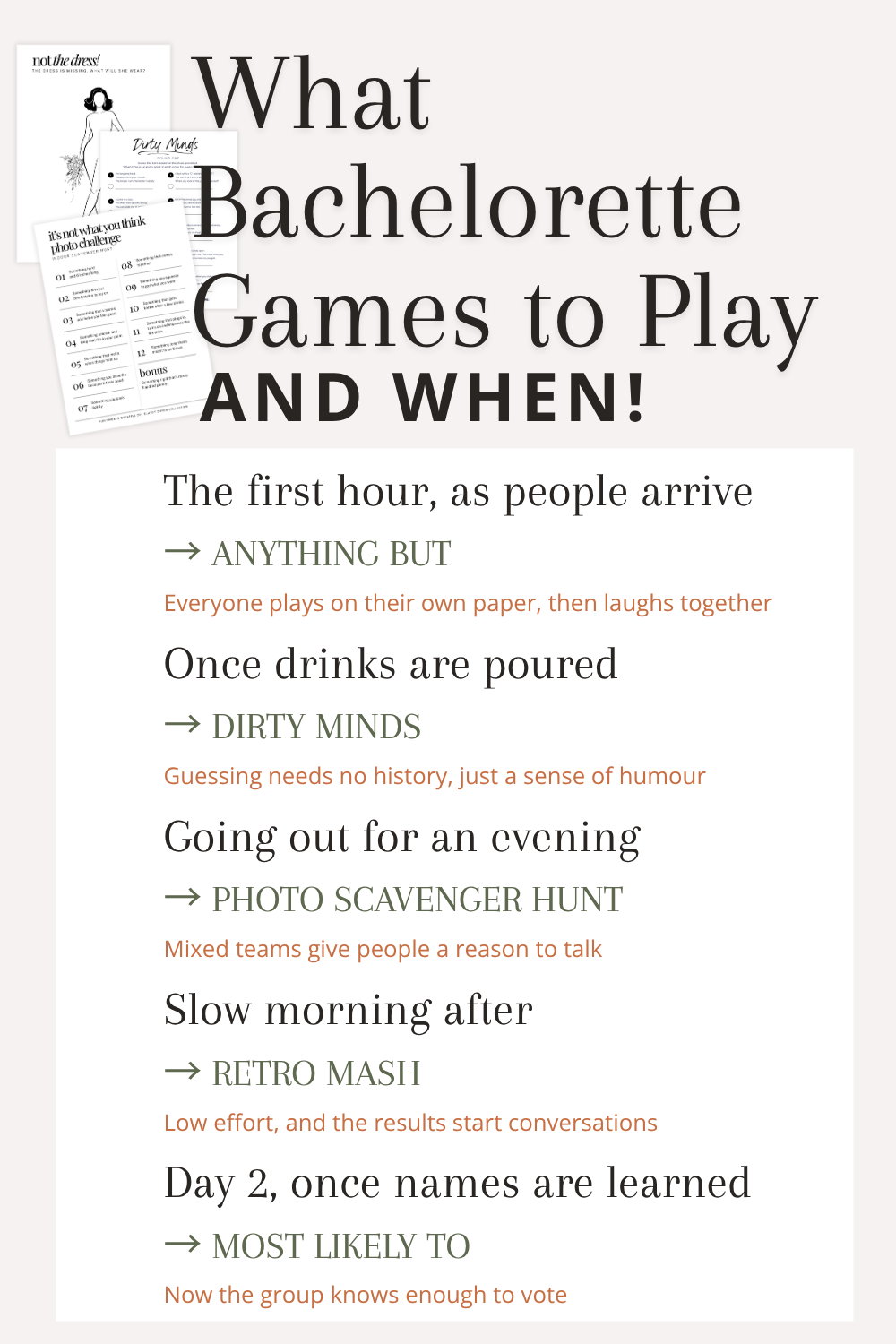
Below is a quick guide to which game fits which part of the weekend, then the details on each one. The same plan works for a hen do where half the group has never met.

Which game for which part of the weekend
Why some games stall with a new group
Games built on shared history leave half the room out. Bride trivia, inside-joke questions and "who knows her best" rounds all reward the people who've known her longest. The newer friends spend the round smiling and checking their phones.
Three kinds of games work much better:
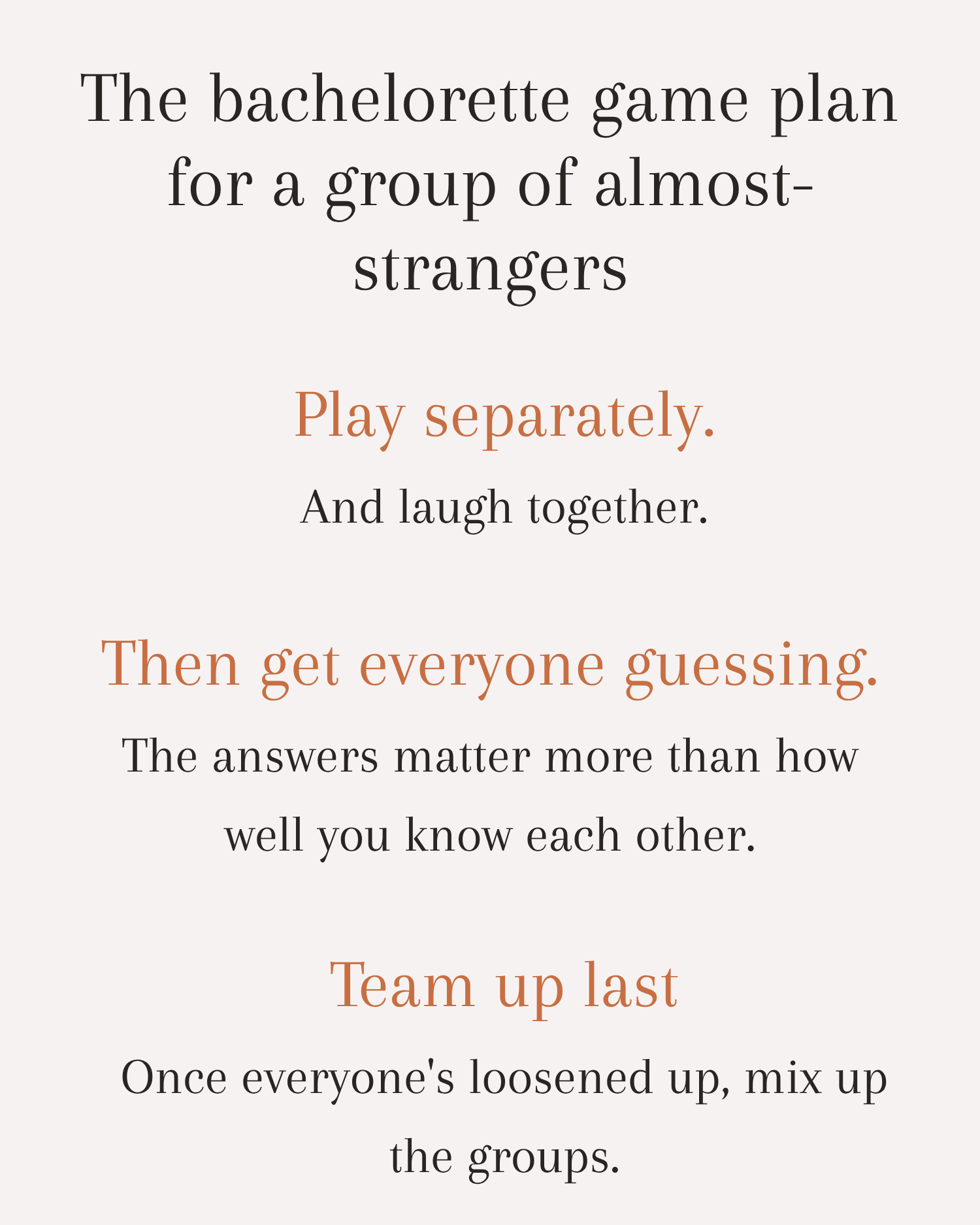
Parallel play. Everyone does the same thing on their own paper, then compares. Nobody performs alone.
Guessing. Everyone starts from zero, so a stranger is as likely to win as the maid of honour.
Teams. A shared goal gives two strangers a reason to talk that isn't "so how do you know the bride?"
Every game below fits at least one of those.
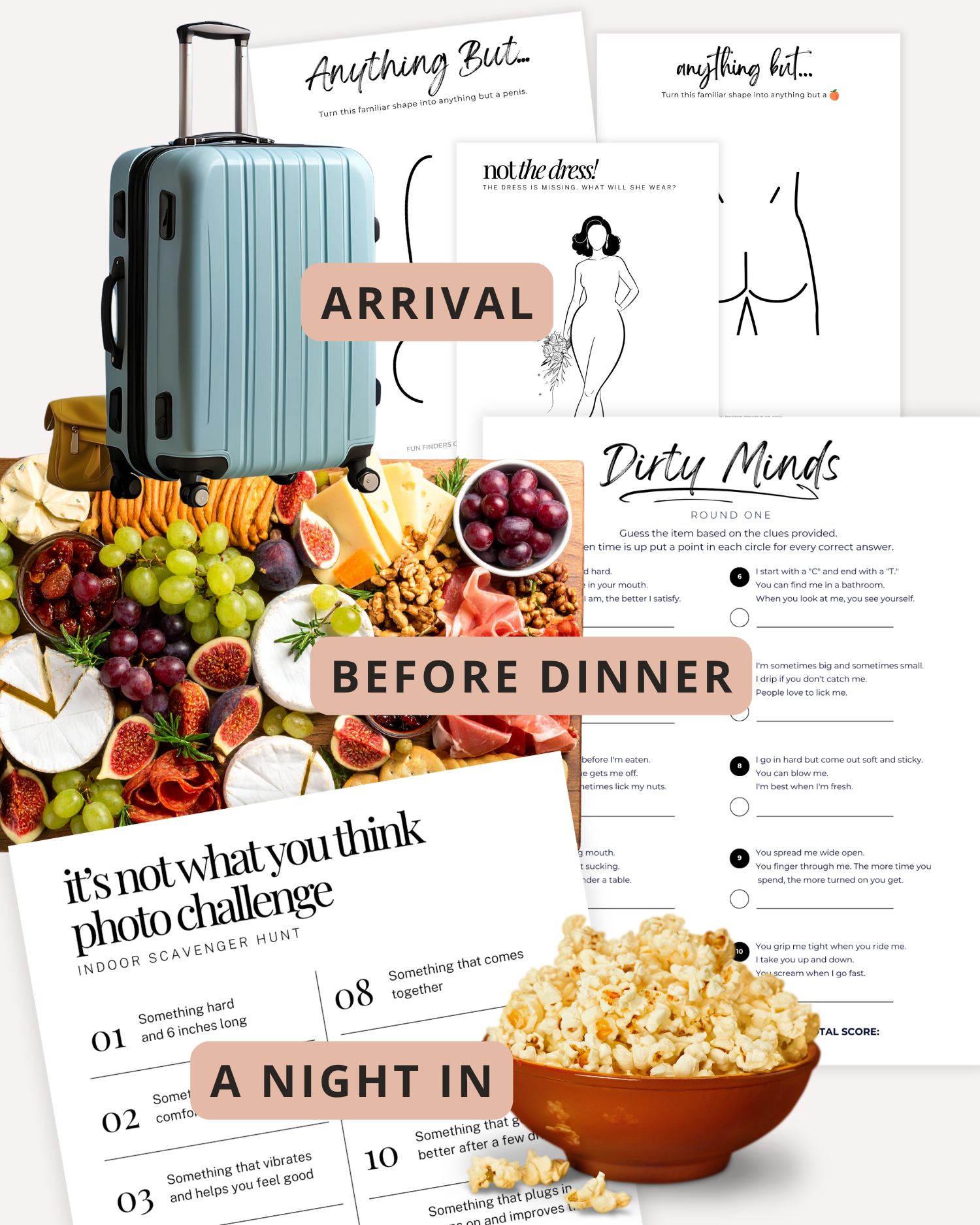
Anything But: for the first hour
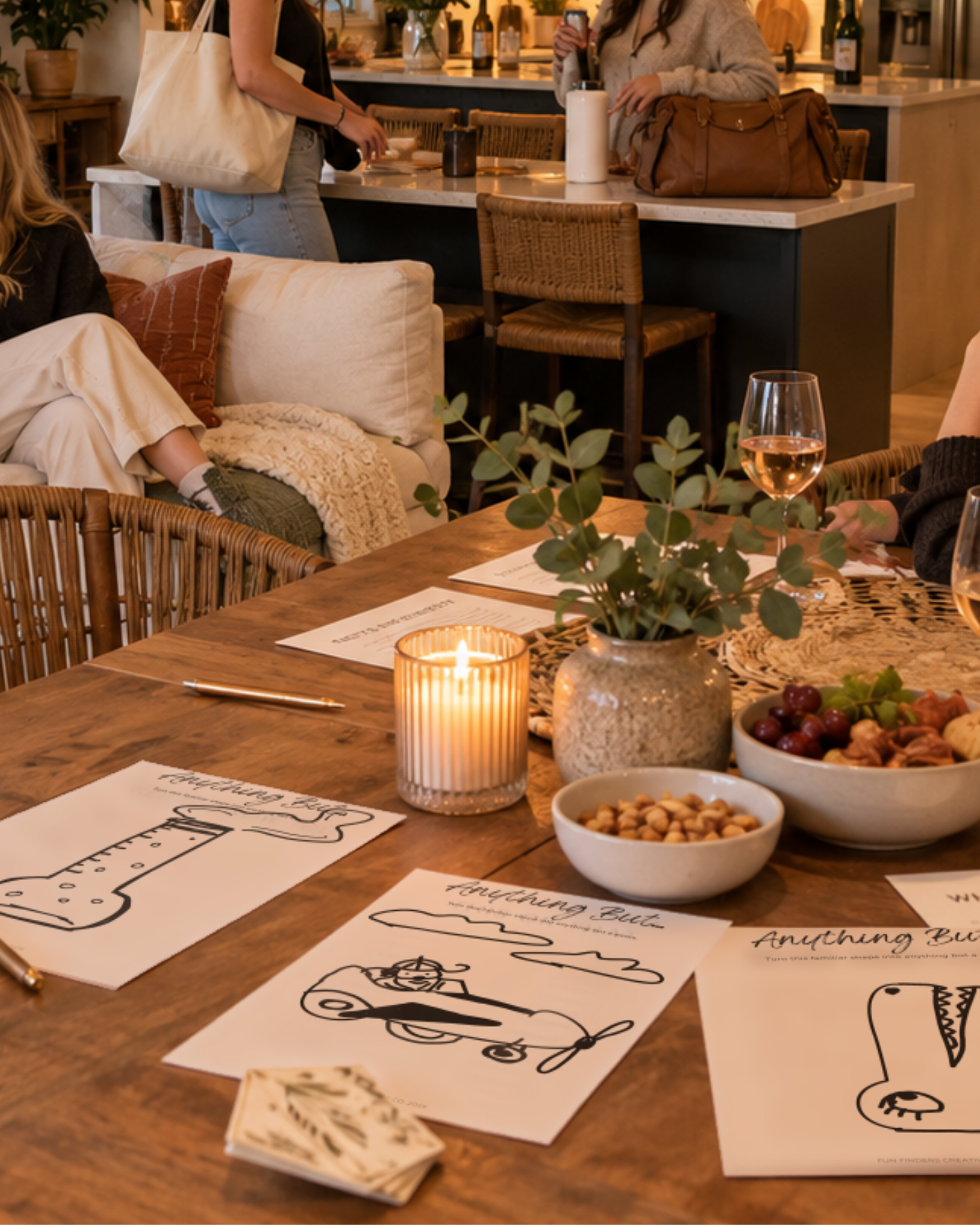
Each prompt starts a picture and rules out the obvious way to finish it. Everyone draws on their own sheet, then the drawings go around the room.
Why it works with strangers: nobody needs to know anyone. Nobody is put on the spot either, because everyone reveals at once. By the third prompt, the cousin and the coworker are arguing about whose drawing is worse.
When to play: arrivals. People can join as they walk in, so you're not waiting for the last car.
Setup: print it, put pens on the table.
Dirty Minds: once the drinks are poured
Every clue sounds rude. Every answer is innocent. The group shouts guesses, and the laughs come from how fast some people reach for the wrong one.
Why it works with strangers: it's pure guessing, so the newest friend has the same shot as the maid of honour. It also shows you quickly who in the group has the best sense of humour.
Worth knowing: it runs on innuendo. Play it after the first hour, once the group has relaxed a little.
When to play: pre-dinner, or the second hour of a night in.
Setup: one printed set, one person reading.
Photo Scavenger Hunt: for going out, in mixed teams
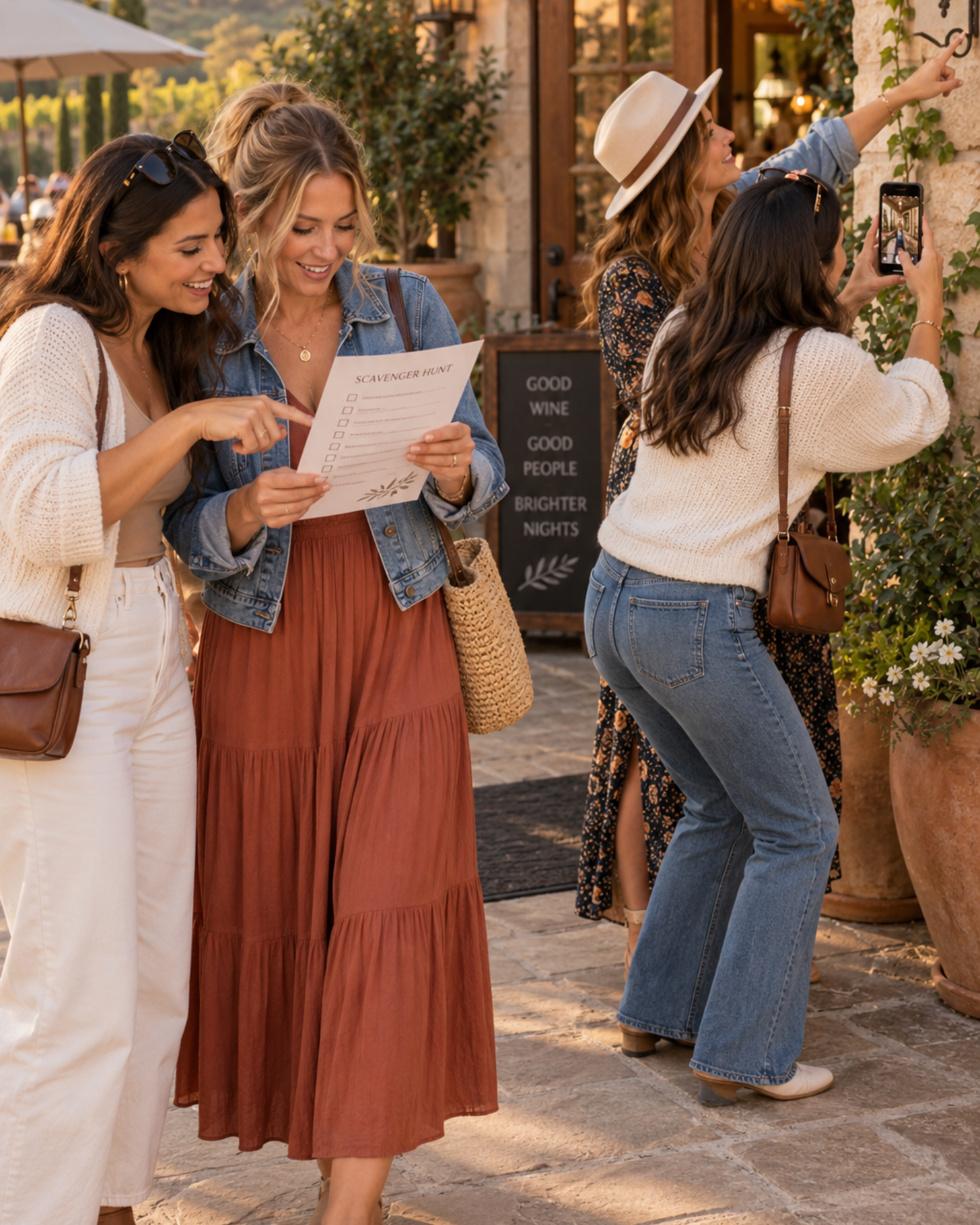
A list of photos to collect over the night. Split into teams and see who finishes the list first.
Why it works with strangers: teams turn two people who just met into co-conspirators. Plotting how to get the next photo breaks the ice faster than any amount of small talk.
When to play: the night out. It fills the walk between venues and keeps the group from splitting into its usual cliques.
Setup: print a list for each team. Phones do the rest.
MASH: for the slow morning
The fortune-telling game from every school sleepover. Fill in the categories, draw the spiral, count it out, and find out where you'll live and what you'll drive.
Why it works with strangers: everyone plays their own sheet, and reading the results out loud starts real conversations. You learn more about someone from what they put in their categories than from asking what they do for work.
When to play: the morning after, over coffee, when nobody has the energy for anything louder.
Setup: a printed sheet and a pen each.
Most Likely To: save it for day two
Read a prompt, and everyone points at who's most likely to do it. It's quick, opinion-based and very funny once the group has a feel for each other.
Why it waits: on night one, strangers have nothing to vote on, so everyone points at the bride. By day two, people have watched each other pack, order and sing in the car. Now the votes land.
When to play: the second evening, or the last dinner of the weekend.
Setup: it's editable, so swap in prompts that suit your group before you print.
How to mix the teams without making it a thing
Left alone, people team up with whoever they arrived with. A few easy ways to shuffle them:
Birthday months. January to June on one team, July to December on the other.
Draw from a hat. Write names on scraps of paper. Nobody can argue with the hat.
Pair one-and-one. Put one person who knows the bride well with one who's newer. They each bring something to the team.
Keep the bride on whichever team needs her most. She knows everyone, which makes her the best bridge in the room.
Planning a full weekend?
Three of the games above come together in one bundle: Anything But, Dirty Minds and the Photo Scavenger Hunt. That covers the first hour, the pre-dinner lull and the night out, which is exactly where a new group needs the most help. It also costs less than buying all three separately.
For one evening with a smaller group, Anything But on its own is plenty.
The short version
Start with a game where everyone plays at once and nobody needs history. Move to teams when you go out. Save the voting games for when people have learned each other's names.
By the last morning, the work friends and the school friends will be sharing a booth at brunch. That's the whole goal.
For more on timing and how many games to plan, see Bachelorette Party Games Everyone Enjoys.
